OVERVIEW
What working with PEEK actually involves.
PEEK is a high-performance thermoplastic: it keeps its mechanical properties at temperatures where most thermoplastics soften, resists chemicals, and is used where failure is not an option – medical implants, aerospace fittings, semiconductor parts. It is also around $80-120 per kilogram, which is why we treat it as an engineering decision rather than a material choice.
| Property | What it means for your tool |
|---|---|
| Shrinkage | About 1.0-1.5% |
| Melt temperature | Around 340C – far above commodity resins |
| Mould temperature | Above 160C; the tool has to be heated and controlled |
| Strength | Retains stiffness and wear resistance well past 200C |
| Cost | Roughly $80-120/kg – 30-50 times the price of PP |
| Typical grades | Virgin, carbon-filled, glass-filled, and medical biocompatible grades |
The tool must be hot
PEEK will not fill a cold cavity properly and will not release cleanly. We run heated tools with temperature control on the core, not just the hot runner, and we cycle the heater and thermocouple with the part so the number is repeatable.
Steel is not negotiable
At those temperatures and with filled grades, a P20 cavity will not last. PEEK tools are built in hardened, corrosion-resistant steel, and every cooling circuit is designed around the mould temperature rather than around the resin.
The real question is whether you need it
For most parts, PA66-GF30 gives a fraction of the performance at a fraction of the material cost. We will tell you honestly when a cheaper resin passes your test, because PEEK parts are expensive to make and expensive to run.
Typical parts we run in this material
- Medical: implantable instrument components, surgical device parts
- Aerospace: seat components, latch mechanisms, wear parts
- Semiconductor: wafer-handling components, insulator parts
- Chemical processing: valve seats, pump components
- High-end industrial: bearing cages, high-temperature gears
Where it gets difficult
- PEEK is not a drop-in upgrade – it needs a heated tool, a different steel and a tighter process window, and the part price reflects all three.
- Filled PEEK grades are very abrasive. We tell you the expected tool life with the quotation so you can plan the maintenance, instead of finding out at the 200,000th shot.
- If the application is medical, we need the target standard and the market at DFM stage – not after the tool is cut.
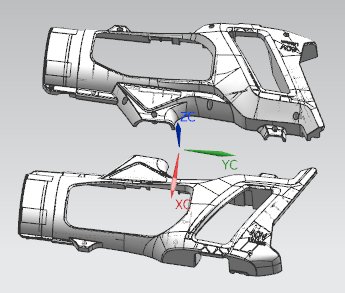 CAD VISUALIZATION
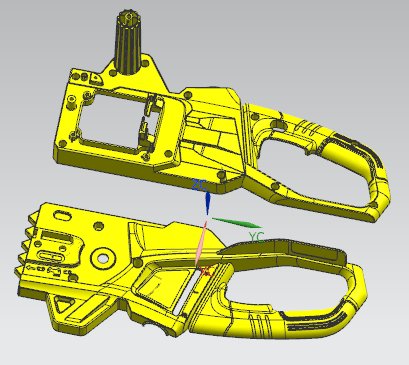 CAD VISUALIZATION
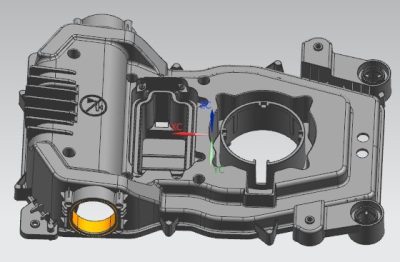 CAD VISUALIZATION
Mold-flow studies we run before steel is cut, on the real part geometry.
Send us the drawing.
We will come back with material grade, cavity count, tool steel and a dated T1 schedule.