OVERVIEW
What working with Nylon (PA6 / PA66) actually involves.
Nylon – polyamide – is the default answer when a part has to survive being assembled, take an impact, or slide against something. It is tough, wear-resistant, and it can be reinforced to be very stiff. It is also semi-crystalline and moisture-absorbing, and both of those facts change how you design the tool and how you run the material.
| Property | What it means for your tool |
|---|---|
| Shrinkage | About 0.7-2.2% and it changes with moisture – dry versus conditioned is not the same dimension |
| Behaviour | Semi-crystalline, high toughness, good fatigue and chemical resistance |
| Moisture | Absorbs water and swells – conditioning changes the part size |
| Wear | Good abrasion resistance, especially glass-filled |
| Watch out | Moisture-driven dimensional drift, and galvanic/chemical stress if the wrong grade is used |
| Typical grades | PA6, PA66, PA6-GF15/30, PA66-GF30 (about 180 MPa tensile), MC nylon |
Moisture is the whole story
Conditioned nylon is bigger than dry nylon. If you are quoting a part to a tolerance, decide with the customer whether the part is measured dry or at a defined conditioning state, and we dimension the cavity for that state.
The tools have to survive the resin
Unfilled nylon is abrasive – it will wear a soft P20 cavity, especially with glass fibre. For long-life nylon tools we specify hardened cores and a wear-resistant cavity, and we plan for the maintenance that filled grades need.
Glass-filled changes everything
GF30 nylon is dramatically stiffer and dimensionally stable, but it is anisotropic: it shrinks differently along the flow direction and across it, which is the main cause of warpage in filled parts. We balance the layout around that and tell you which directions to hold tight.
Typical parts we run in this material
- Automotive: clips, retainers, hinges, under-bonnet reservoirs
- Electrical: connectors, terminal blocks, cable-tie bodies
- Industrial: gears, bushings, rollers
- Consumer: hinges, latches, tool handles
- Garden and irrigation: fittings, valve bodies
Where it gets difficult
- Never quote an unfilled nylon part to a tight tolerance without agreeing the conditioning state – the part will be measured differently at your customer than in our shop.
- Filled grades need a hardened tool. If the volume justifies it we will quote the harder steel up front rather than have a cavity wear out in year two.
- For a part that snaps or hinges, specify the grade for fatigue, not just for stiffness – the wrong PA will fail after a few thousand cycles.
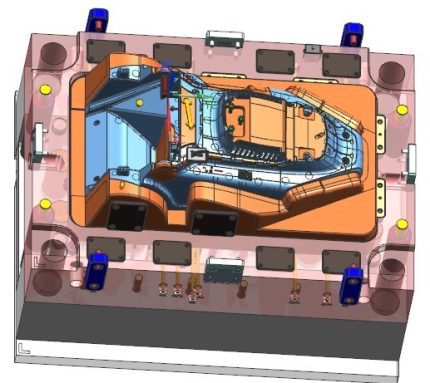 CAD VISUALIZATION
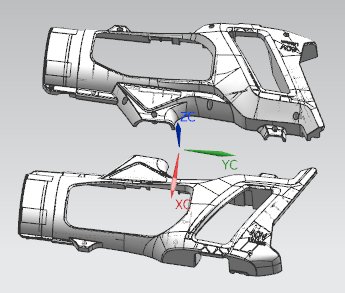 CAD VISUALIZATION
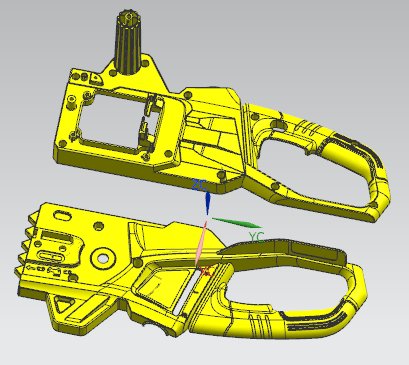 CAD VISUALIZATION
Mold-flow studies we run before steel is cut, on the real part geometry.
Send us the drawing.
We will come back with material grade, cavity count, tool steel and a dated T1 schedule.