OVERVIEW
What working with Food Grade actually involves.
Food-grade is not a material, it is a compliance route. The same PP that goes into a food container and the same PP that goes into a car trim are chemically identical; what differs is the resin grade, the supplier’s declaration, the processing history and the paperwork. Buyers who treat food grade as a resin name usually find out at the audit.
| Property | What it means for your tool |
|---|---|
| What it covers | The resin grade, the additives, the process and the documentation |
| US route | FDA food-contact compliance for the intended use, with the supplier declaration |
| EU route | EU 10/2011 plastics regulation, Declaration of Compliance with traceability |
| Documentation | MTR per lot, CoC, and the declaration covering your specific grade |
| Watch out | Migration limits depend on the food type, contact time and temperature – not just the material |
| Typical materials | PP, PE, HDPE, LDPE, PET, PETG, ABS (food grade), PC/ABS, PA (with limits) |
Start with the food, not the resin
The regulation cares about the combination of material, food type, contact time and contact temperature. We ask for all four before quoting, because the same PP can be compliant for a dry good at room temperature and non-compliant for a hot fatty food.
Ask for the grade, not the family
We quote a named grade and a named supplier’s declaration. If you need a specific grade that is not in our default list, we source it and the lead time changes – we will say so rather than silently substituting.
The paperwork travels with the batch
Every batch leaves with MTR and a certificate of conformity, and we keep the declaration on file against your part number. That is what makes an audit survivable – not the resin, the traceable record.
Typical parts we run in this material
- Food containers and lids
- Bottles, caps and closures
- Drinkware and kitchen tools
- Food-dispenser pumps and valves
- Tray and cutlery systems
Where it gets difficult
- Ask for the Declaration of Compliance for the grade before you place the order, not after the audit. We will send it with the quotation.
- ‘Food grade’ on a drawing is not a specification. Write the regulation and the intended use into the drawing notes and everything downstream is faster.
- Hot-filling and fatty foods are the hard cases. Tell us the fill temperature and the fat content and we will confirm what the grade can carry.
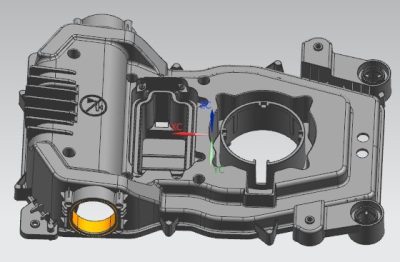 CAD VISUALIZATION
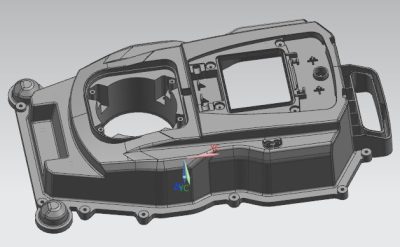 CAD VISUALIZATION
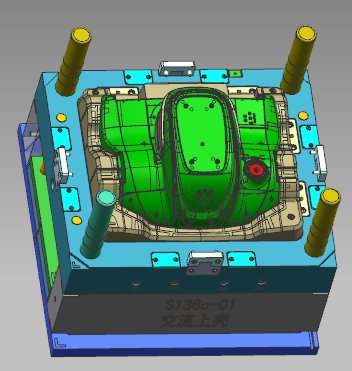 CAD VISUALIZATION
Mold-flow studies we run before steel is cut, on the real part geometry.
Send us the drawing.
We will come back with material grade, cavity count, tool steel and a dated T1 schedule.