OVERVIEW
What working with Glass-Fibre Reinforced actually involves.
Adding glass fibre to a resin changes the part and the tool at the same time. The part gets stiffer, lighter and far more dimensionally repeatable; the tool gets abrasive and starts wearing much sooner. A GF30 part that holds tolerance to ±0.03mm in year one can drift by the time the cavity has worn, and that is a mold decision, not a resin decision.
| Property | What it means for your tool |
|---|---|
| Shrinkage | Lower and more repeatable than the unfilled resin |
| Stiffness | Roughly 3-5x the unfilled resin – a thin wall can replace a thick one |
| Weight | Lighter than unfilled plastic of the same stiffness |
| Warpage | The main risk: the fibre shrinks differently along and across the flow |
| Tool wear | Severe – glass fibre is abrasive and cuts cavity steel |
| Typical grades | PA6-GF15/30, PA66-GF30, PP-GF20/30, ABS-GF, PBT-GF |
Lay the fibre, or plan around it
The fibre follows the flow. We design the gate and the rib layout so the primary fibre direction is the direction you want the part to be stiff in, and the cross-flow direction is the one you hold loosely. Getting this wrong is what causes the twisted, warped part everybody blames on the machine.
The tool has to be a wear tool
GF resin is abrasive. We quote P20 plus hardened inserts for short runs, and full hardened steel – often 1.2316/S136 or higher with a nitrided surface – for production volumes that justify it. We state the expected tool life in the quotation.
Cavity design for stiffness, not thickness
The point of a reinforced grade is that you can thin the wall. That lowers cycle time, lowers material cost and reduces sink – but it also means the tool has to hold a thinner, lighter part accurately, which is harder to machine and easier to damage.
Typical parts we run in this material
- Automotive: seat structures, pedal boxes, mirror brackets, under-bonnet brackets
- Appliance: washing-machine tubs, dryer drums, structural brackets
- Industrial: pump housings, gearboxes, mounting plates
- Consumer: luggage shells, chair frames, tool handles
- Garden tools: handles and structural grips
Where it gets difficult
- Do not quote a GF part without agreeing the fibre direction. It is the single biggest source of batch-to-batch complaints on reinforced parts.
- A thin GF wall can be stiffer than a thick unfilled one – worth checking before you pay for the resin.
- If the part is structural and the volume is high, the tool cost of running GF is worth a proper wear-resistant cavity. We will put that in the quotation rather than let you discover it.
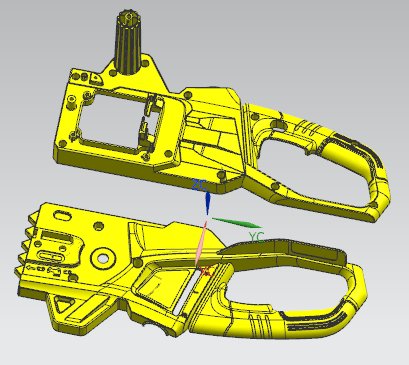 CAD VISUALIZATION
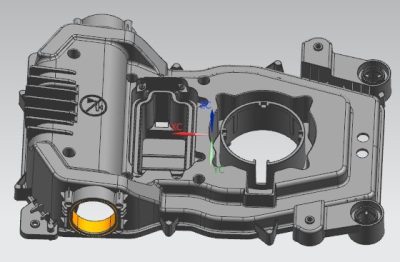 CAD VISUALIZATION
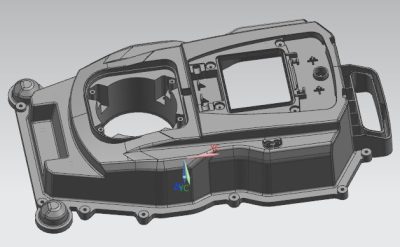 CAD VISUALIZATION
Mold-flow studies we run before steel is cut, on the real part geometry.
Send us the drawing.
We will come back with material grade, cavity count, tool steel and a dated T1 schedule.