High-pressure aluminum die casting (HPDC) operates under some of the most aggressive thermo-mechanical conditions in modern manufacturing: molten aluminum injected at 660°C to 700°C under intense velocities exceeding 40–60 m/s and locking pressures up to 150–250 MPa. Under these harsh cycles, tooling longevity is the single largest factor determining part cost and production downtime.
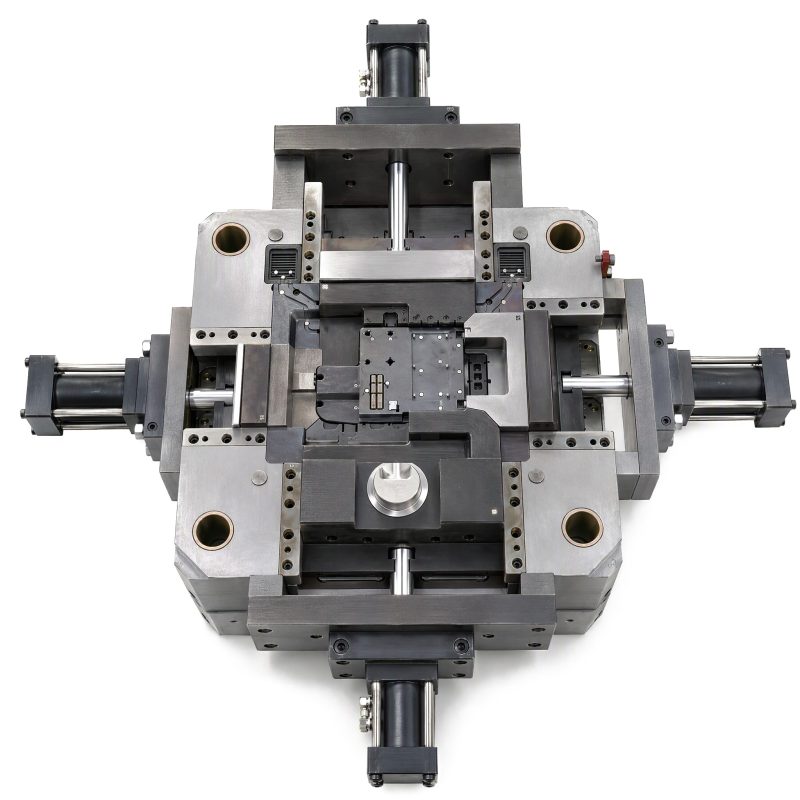
At HX Mould, our heavy-duty Aluminum Die Casting Moulds are engineered to withstand rigorous thermal shock and mechanical fatigue. In this technical guide, our toolmakers break down the critical relationships between hot-work steel selection (Dievar, 1.2367 ESR, Uddeholm 8418), vacuum heat treatment (HRC 48–52), primary failure mechanisms, and practical maintenance strategies to achieve 80,000 to 120,000+ reliable shots.
1. The Three Primary Die Casting Mould Failure Modes
Understanding why and how die casting tooling deteriorates is essential for choosing the right steel and designing robust cooling circuits:
A. Thermal Fatigue (Heat Checking) – Accounts for >70% of Tool Failures
During each injection cycle, the cavity surface experiences severe thermal cycling: heating up to ~600°C upon metal contact and rapidly dropping to ~200°C during water-based die release spraying. This steep cyclic expansion and contraction generates severe alternating compressive and tensile stresses, leading to a spider-web network of micro-cracks (heat checking) across the cavity.
B. Molten Metal Erosion & Soldering (Cavity Washout & Adhesion)
At high gate in-flow velocities (40–60 m/s), molten aluminum chemically reacts with iron in the steel surface, forming brittle Fe-Al intermetallic compounds. This causes severe aluminum soldering (galling) on core pins and erosion washouts near gating areas.
C. Gross Cracking and Stress Fracture (Early Catastrophic Failure)
Caused by sharp internal corner notches (R < 1.0 mm), inadequate steel fracture toughness, improper EDM recast layers, or excessive mechanical clamping stress, gross cracking causes sudden split failure across the die insert.
2. Premium Hot-Work Tool Steel Selection Matrix (Dievar, 1.2367, 8418)
Selecting certified premium-grade hot-work tool steels with high isotropic toughness, hot yield strength, and cleanliness is the first line of defense against thermal fatigue:
| Steel Grade | Typical Hardness | Key Characteristics | Best Application |
|---|---|---|---|
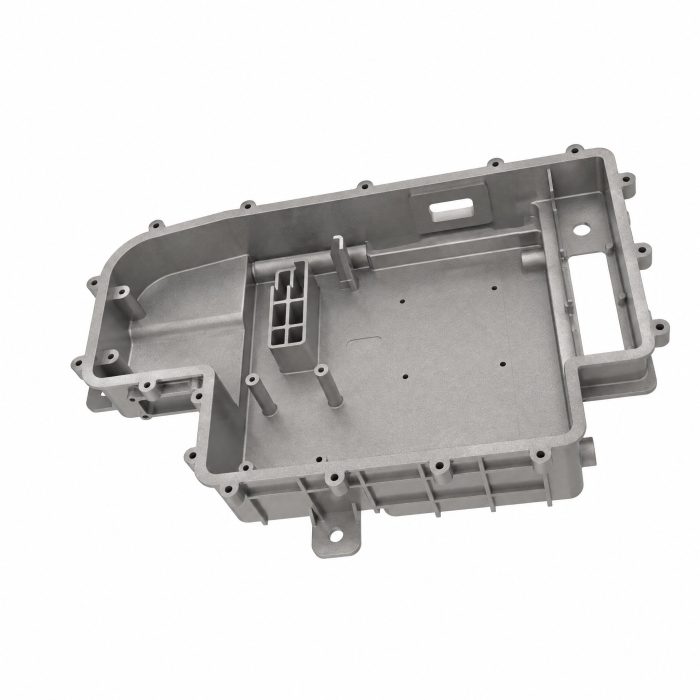
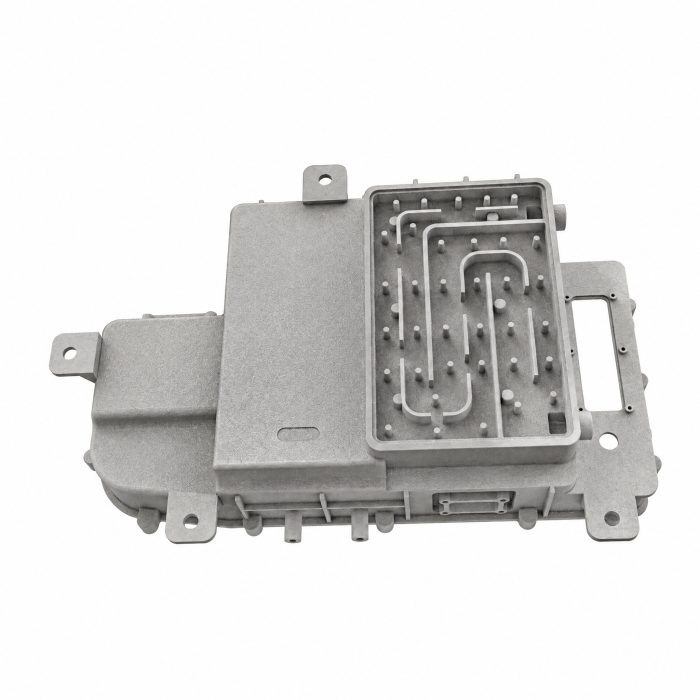
| Uddeholm Dievar | HRC 48 – 52 | Industry-leading toughness and ductility; highest resistance to thermal fatigue and gross cracking | Automotive structural parts, EV inverter enclosures, thin-wall heat sink housings |
| DIN 1.2367 ESR (X38CrMoV5-3) | HRC 48 – 52 | High molybdenum content (3.0% Mo); exceptional high-temperature yield strength and temper resistance | High-wear gating areas, core pins, deep rib inserts, high-pressure liquid cooling dies |
| Uddeholm 8418 Supreme | HRC 48 – 52 | Upgraded next-generation premium ESR hot-work steel with superior isotropic toughness over standard H13 | High-precision transmission cases, complex multi-slide hydraulic housings, inverter chassis |
| 1.2344 ESR / Premium H13 | HRC 46 – 50 | Reliable standard hot yield strength, balanced temper resistance, excellent machinability | Standard automotive & industrial aluminum and zinc die casting |
3. Engineering Strategies for 100,000+ Shot Tool Life
- NADCA #207 Vacuum Heat Treatment: Precise vacuum quenching with nitrogen overpressure (4–6 bar) followed by triple tempering to HRC 48–52 to ensure 100% martensitic transformation and maximum resistance to high-temperature thermal cycling.
- Thermal Balance via Conformal Oil & Water Circuits: Positioning cooling lines 15–25 mm from the cavity surface maintains a steady die operating temperature (220°C–260°C), avoiding thermal shocks.
- Surface Duplex Treatment (PVD + Nitriding): Applying thin TiAlN/CrN PVD coating over a plasma-nitrided diffusion layer creates a high-hardness barrier (Hv > 2500) preventing molten aluminum contact.
- Stress Relief Annealing Schedule: Performing intermediate stress-relief tempering at ~30°C below the final tempering temperature every 25,000 shots resets residual tensile stresses before micro-cracks propagate.
Frequently Asked Questions (FAQ)
Q1: Why is HRC 48–52 the optimal hardness for Dievar, 1.2367, and 8418 in aluminum die casting?
Answer: At HRC 48 to 52, premium ESR hot-work tool steels achieve peak high-temperature yield strength and temper resistance, significantly delaying thermal fatigue (heat checking) and high-velocity erosion without risking brittle fracture, thanks to their exceptional isotropic toughness.
Q2: What is the risk of lower hardness (HRC 42–45) vs excessive hardness (HRC > 54)?
Answer: Hardness below HRC 46 causes premature plastic deformation, cavity washout, and early heat checking. Conversely, exceeding HRC 54 significantly reduces impact toughness, causing brittle gross cracking under high locking forces.
Q3: How often should die casting moulds undergo maintenance and stress relief?
Answer: We recommend performing initial stress-relief tempering after the first 3,000 to 5,000 shots, followed by routine stress relief every 20,000 to 25,000 shots to neutralize accumulated cyclic fatigue stresses.
Need High-Durability Aluminum Die Casting Tooling?
From complex EV controller housings to heat sink enclosures, Ningbo Hengxin Mold provides full DFM engineering, Flow-3D simulation, and certified steel tooling (Dievar, 1.2367, 8418 hardened to HRC 48–52).